Tattoo Styles Guide
Twelve tattoo styles you can generate with Tattoo Ideas AI: what defines each look, who it suits, how it ages and a prompt to try, plus a gallery of public designs for every style.
Browse 12 tattoo styles
Sketch
Looks like a page from a sketchbook: loose pencil or ink strokes, visible construction lines and hatching that is left in on purpose. It suits subjects with an artistic, unfinished feel, such as portraits, animals and botanical studies.
Ideal if you want a tattoo that looks drawn by hand rather than polished. Light lines and tight hatching soften with age, so a medium size or larger keeps it readable.
Prompt to try:
See designs →a hummingbird drawn in graphite with loose construction lines
Realistic
Aims for a photographic look with smooth tonal gradients, accurate proportions and careful light and shadow. Portraits, animals and nature scenes are the classic subjects.
Suits people who want a faithful likeness, such as a portrait of a loved one or a pet. Because it relies on subtle shading, it ages best when done large with strong contrast.
Prompt to try:
See designs →close-up of a lion's face with soft side lighting and detailed fur
Minimalist
Reduces a subject to a few clean lines or simple shapes with plenty of bare skin around them. Small symbols, outlines, single words and dates are typical.
A popular choice for first tattoos and discreet spots. Fine lines can spread slightly over the years, so leave space between them and keep lettering large enough to read.
Prompt to try:
See designs →single-line outline of a cat curled into a circle
Black and White
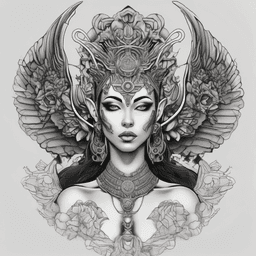
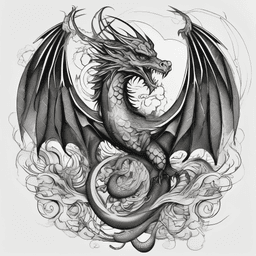
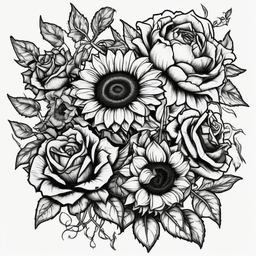
Uses only black and grey tones and builds depth with shading and contrast instead of color. It ages predictably and suits almost any subject, from lettering to portraits.
A safe pick if you are unsure about color or want to match other black and grey pieces. Strong contrast holds up best, while very pale grey washes can lighten with time.
Prompt to try:
See designs →a compass and a rose in soft black and grey shading
Surreal
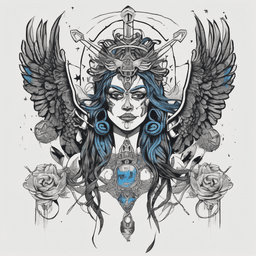
Combines things that do not belong together, like melting clocks, a face that opens onto a landscape or an eye inside a moon, to create a dreamlike image with a personal meaning.
Good for anyone who wants an image nobody else has. Surreal scenes are often shaded realistically, so they need generous size and clear contrast to stay distinct as they age.
Prompt to try:
See designs →a whale swimming through clouds above a lighthouse
Geometric
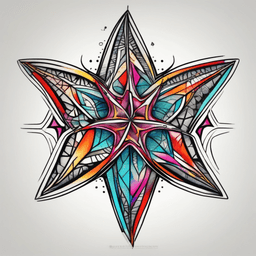
Built from precise lines, circles, triangles and repeating patterns, often symmetrical and sometimes inspired by sacred geometry. It can stand alone or frame an animal or a flower.
Appeals to fans of clean, graphic designs that can be extended later. Straight lines and symmetry show any distortion, so flatter areas such as the outer forearm or upper back keep shapes truest.
Prompt to try:
See designs →a symmetrical wolf head made of triangles and thin lines
Blackwork
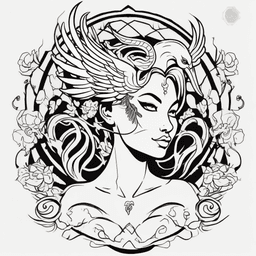
Relies on large areas of solid black ink, bold silhouettes and deliberate empty skin. It covers ornamental, tribal-inspired and illustrative work that reads clearly even from a distance.
Made for people who like strong contrast and graphic shapes. Solid black ages very well, but it is hard to cover later, so plan large filled areas carefully.
Prompt to try:
See designs →a moth silhouette in solid black with ornamental patterns
Japanese
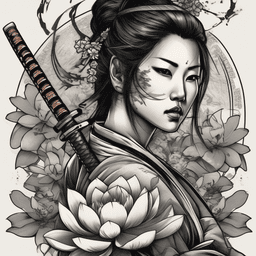
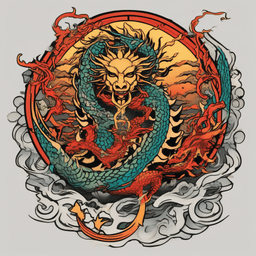
Inspired by traditional Japanese tattooing (irezumi): koi, dragons, tigers, peonies and cherry blossoms framed by wind, waves and clouds, with bold outlines and flat, rich color.
Best for people ready to plan a large piece around the body, usually finished over several sessions. Bold outlines and solid, saturated color help traditional Japanese work age well.
Prompt to try:
See designs →a koi swimming upstream through waves and cherry blossoms
Old School
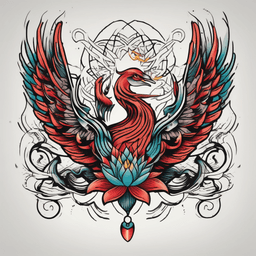
Also called American traditional: thick black outlines, a limited palette of red, green, yellow and black, and classic flash motifs such as swallows, anchors, roses, daggers and eagles.
Great for fans of classic tattoo imagery and for collecting small pieces over time. Thick outlines and solid color age well, so the designs stay readable even when small.
Prompt to try:
See designs →a swallow carrying a banner, bold outline, red and green
Cartoon
Playful and expressive, with clean outlines, simple shading and exaggerated features borrowed from comics and animation. Good for pets, food, cute animals and original characters.
Fits anyone who wants a tattoo with a sense of humor. Clean outlines age well, but bright colors fade faster in the sun and tiny facial details can blur on small pieces.
Prompt to try:
See designs →a cheerful cartoon cat holding a coffee cup
Watercolor
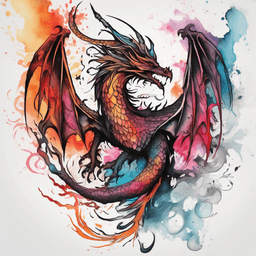
Imitates watercolor painting with soft color washes, splashes and drips that run past the outline. It is often combined with thin black linework to keep the shape defined.
Suits people who prefer a soft, painterly look to crisp graphic lines. Pale washes fade sooner than dark ink, especially in the sun, so designs with little black may need touch-ups.
Prompt to try:
See designs →a fine-line feather with pink and purple watercolor splashes
Dotwork
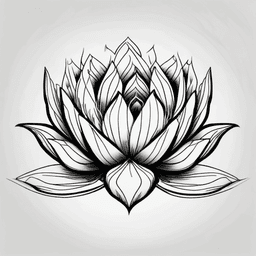
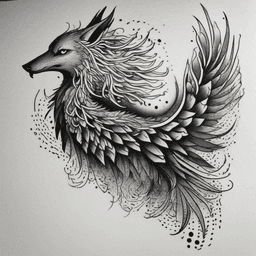
Creates shading and patterns entirely from small dots, from soft gradients to detailed mandalas. It is often paired with geometric designs.
Appeals to people who enjoy fine texture and ornamental patterns. Dots can merge slightly with age, softening the shading, so keep very dense stippling for larger pieces.
Prompt to try:
See designs →a lotus mandala with stippled dotwork shading
What a tattoo style changes
A tattoo style is the visual language of a design: line weight, shading method, color palette and how much detail it carries. The same subject, whether a rose, a wolf or a name, looks completely different as bold old school flash than as a fine-line minimalist piece, so settling on a style early makes every later decision easier.
Open any style above to see public designs generated in it, along with notes on placement and prompt wording. In the generator, you pick the style from a menu and describe the subject in your own words.
How to choose between tattoo styles
Start with your subject
Some subjects point to a style on their own: a portrait of a person or pet suits realistic or sketch work, a date or small symbol suits minimalist lines, and swallows, koi or dragons belong to the old school and Japanese traditions.
Think about your other tattoos
If you plan several pieces in one area, such as a sleeve, sticking to one style or palette makes them read as a set. Mixing styles can work too, and your artist can help you balance them.
Use the design as a starting point
Generated images are concepts, not stencils. Take the version you like to a licensed tattoo artist, who can adjust line weight, size and composition for your body and skin.
Frequently asked questions
Which tattoo styles age best?
All tattoos soften over time as the ink spreads slightly in the skin, so fine lines, tiny text and pale colors lose definition first. Bold outlines and solid black, as in old school, blackwork and Japanese work, hold their shape longest. Protecting a healed tattoo from the sun helps every style last.
Which styles work for small or fine-line tattoos?
Minimalist designs suit small spots best: a few clean lines, simple shapes and some bare skin around them. Old school also holds up at a small size thanks to its thick outlines. Realistic, dotwork and sketch pieces need more room, because fine detail packed into a small area tends to blur.
Should I choose color or black and grey?
Black and grey keeps its contrast longest and shows up on every skin tone. Color is part of the look of Japanese, old school, cartoon and watercolor tattoos, but light shades fade faster in the sun and can look faint on darker skin, so ask your artist which colors will stand out on yours.
How do I try a style in the tattoo generator?
Open the tattoo generator, describe your idea, choose a style from the menu and pick full color or black and white. Sign in with Google to create designs; every account gets 10 free designs a day. To compare styles, keep the same description and change only the style.
Ready to try one? Open the generator, choose a style and describe your idea. Open the tattoo generator